Be careful These 12 Vulnerabilities of Wi-Fi That Put You at Risk of Dangerous Frag Attacks
Regardless of current improvements in Wi-Fi security, new vulnerabilities in the way the majority of us get data online are still being found. That was the case upon the current discovery of "frag attacks," which are a result of design defects in Wi-Fi itself.
That means these problems have existed because the innovation's widespread beginning around 1997, and they might have been leveraged in the time given that. Innovation business have actually begun providing spots for a few of their products that are especially susceptible to frag attacks, and more vendors will continue to do so.
IT Support Guys is currently handling this newly discovered vulnerability, guaranteeing our customers are safe from frag attacks. This post will explain what frag attacks are, how they can wind up in your network, and how they are being dealt with.
What is a frag attack?
A hacker in a dark space, carrying out a frag attack.
A frag (fragmentation and aggregation) attack either catches traffic toward unsecured networks to then clone and impersonate servers, or opens the network by injecting plaintext frames that appear like handshake messages. More merely, frag attacks fool your network devices into thinking they are doing something safe.Three of the issues that emerged are style defects within Wi-Fi as a protocol. The rest are configuring errors.
Research into the vulnerabilities showed that accessing networks through these techniques is even possible when Wi-Fi networks are secured using WPA2 or WPA3 encryption.
Once victims link to the damaged network, the opponent then injects harmful packages of data that deceive the victim's computer system into using a destructive DNS server. Due to the design flaw in Wi-Fi, the victim will not be alerted to the transformed packages of information that are tricking their computer system.
When the victim next sees an unsecured site, the assailant's DNS server will send them to a copy of the desired site, allowing the cybercriminal to record keystrokes containing delicate info like usernames and passwords.
Attackers can likewise inject destructive packages of information to "punch a hole" in a router's firewall software if a connected gadget is vulnerable, permitting the attacker to unmask IP addresses and destination ports used to access the gadget. With this access, enemies can take screenshots of the device, or perform programs on its interface.
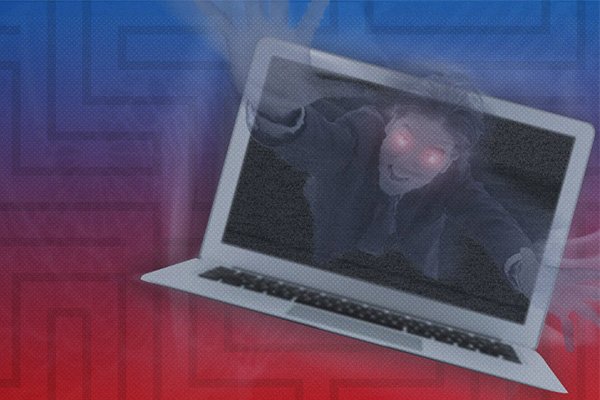
Who identified the possibility of frag attacks?
This vulnerability was found by a scientist called Mathy Vanhoef, who also discovered the "KRACK" Wi-Fi vulnerability back in 2017. Since this post, Vanhoef is a postdoctoral scientist in computer system security at New York University Abu Dhabi.
Vanhoef's findings on frag attacks can be found in full at fragattacks.com, while his findings on KRACK attacks can be discovered at KRACKattacks.com. For his breakdown of frag attacks, see Vanhoef's video listed below.
What routers and gain access to points are impacted by frag attacks?
An old computer system that is more prone to a frag attack.
Due to the fact that it impacts Wi-Fi itself, any gadgets that access Wi-Fi are susceptible. Yes, that's just about every gadget.

Users must ensure to examine that their devices, consisting of routers and network devices, are up to date with spots and firmware. For services with a handled companies who provides network security services, this is probably already being managed for you. Otherwise, make certain to remain diligent about modern-day security procedures, like using strong passwords and staying away from websites that do not use HTTPS.
To guarantee that your devices are upgraded and secured versus frag attacks, inspect your latest firmware logs to see if they have attended to the 12 common vulnerabilities and exposures (CVE):.
Style flaws in Wi-Fi standard:.
CVE-2020-24588: Requirement that the A-MSDU flag in the plaintext QoS header field is authenticated.
CVE-2020-24587: Requirement that all fragments of a frame are encrypted under the same secret.CVE-2020-24586: Requirement that got pieces be cleared from memory after (re) connecting to a network.
Implementation flaws of Wi-Fi standard:.CVE-2020-26145: Acceptance of 2nd (or subsequent) broadcast fragments even when sent in plaintext and procedure them as full unfragmented frames.
CVE-2020-26144: Acceptance of plaintext A-MSDU frames as long as the very first 8 bytes correspond to a valid RFC1042 (i.e., LLC/SNAP) header for EAPOL.CVE-2020-26140: Acceptance of plaintext frames in a protected Wi-Fi network.
CVE-2020-26143: Acceptance fragmented plaintext frames in a safeguarded Wi-Fi network.Other implementation defects:.
CVE-2020-26139: Forwarding of EAPOL frames to other customers although the sender has not yet successfully verified to the AP.CVE-2020-26146: Reassembling of fragments with non-consecutive package numbers.
CVE-2020-26147: Reassembling of fragments despite the fact that a few of them were sent in plaintext.CVE-2020-26142: Treatment of fragmented frames as complete frames.
CVE-2020-26141: Verification of the Message Integrity Check (credibility) of fragmented TKIP frames.Are frag attacks being actively made use of?
A hacker performing a frag attack on an unknowing victim.It is difficult to tell whether opponents have explicitly targeted these vulnerabilities, and there is no proof that they have actually been. Contrarily, cybercriminals work relentlessly to discover vulnerabilities, and concerns that have been unpatched for over 20 years may have been leveraged in the past.
The bright side is that Vanhoef signaled the Wi-Fi Alliance and Industry Consortium for Advancement of Security on the Internet (ICASI) before making his findings public, so tech business might start to spot the vulnerabilities early. The Alliance issued an update on May 11, 2021, mentioning that the hole is easily covered through regular device updates that allow the detection of these transmissions.
Overall, the fact that nobody made note of this vulnerability for so long makes it not likely that http://keegangvql196.image-perth.org/equipping-education-through-digital-transformation-and-government-it-support somebody other than Vanhoef discovered it. If black-hat hackers had actually exploited it previously, white-hat hackers would have found out it was happening.
The prospective exploitation of these openings is severe, however the circumstances must be perfect for a cybercriminal to capitalize. To access your network by means of these vulnerabilities, enemies need to remain in radio range and have direct interaction with a user on the network. It likewise needs misconfigured network settings.
How are IT support companies managing frag attacks?
An IT Support Guys leader dealing with coworkers on the vulnerability that causes frag attacks.
Given how many devices are impacted by this vulnerability, the whole innovation market is reliant on makers' updates to patch them. Suppliers have actually been dealing with spots for over 9 months because Vanhoef revealed the vulnerability.
As this is an ongoing development, ITSG is working directly with suppliers to make sure that all patches are used when released. Microsoft calmly rolled out the patch that covers these vulnerabilities on March 9, 2021. Since all gadgets on our handled devices strategy are patched as quickly as possible, all managed Windows gadgets covered by ITSG currently have the patches they need.
If you are uncertain if your present ITSG plan covers patch management, book a 15-minute talk to our virtual CIO now.